

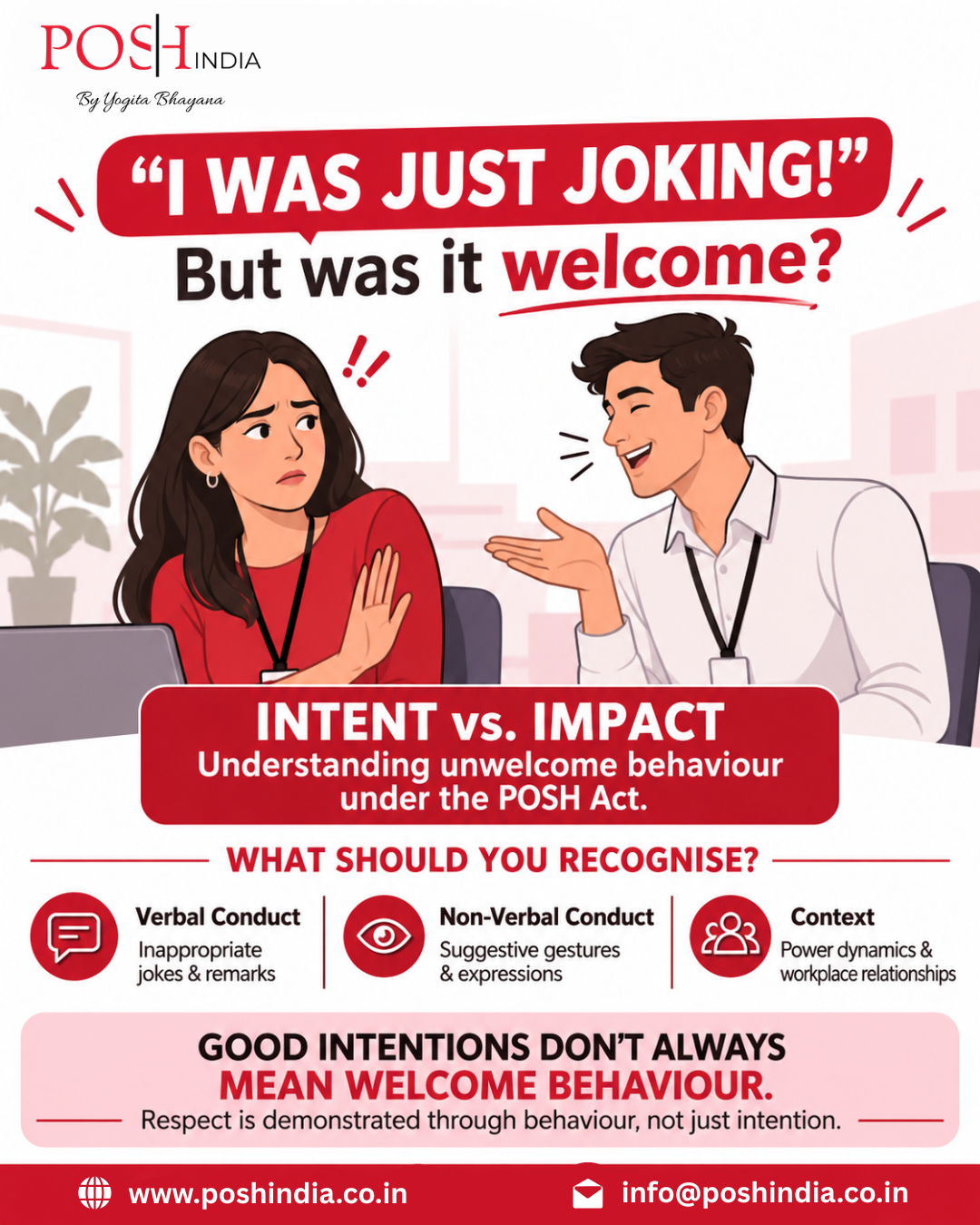
In the workplace, people often justify inappropriate behaviour by saying, “I was just joking” or “I didn’t mean to offend anyone.” But when it comes to understanding sexual harassment, is intention the only thing that matters?
The answer is no.
One of the most important concepts in POSH training is understanding the difference between intent and impact.
- Intent vs. Impact
Intent refers to what a person meant through their words or actions, whereas impact refers to how the behaviour was experienced by another person. A comment intended as a compliment may still be unwelcome and inappropriate.
- Verbal Conduct
Unwelcome comments about someone’s appearance, sexually coloured remarks, inappropriate jokes or repeated personal questions can cross professional boundaries. Even when described as harmless humour, such conduct needs to be assessed in its context.
- Non-Verbal Conduct
Sexual harassment is not limited to spoken words. Unwelcome gestures, sexually suggestive expressions, displaying explicit material or inappropriate physical advances may also fall within the scope of the POSH Act.
- Why Context Matters
The nature of the interaction, workplace relationships, power dynamics, frequency of behaviour and the circumstances surrounding an incident all matter when assessing a complaint.
For Internal Committee members, understanding these distinctions is essential to conducting fair and impartial inquiries.
The Takeaway
A person’s intention does not automatically determine whether behaviour was welcome. Effective POSH awareness helps employees recognise boundaries, understand their actions and respect others.
Because building a safe workplace begins with understanding that respect is demonstrated through behaviour, not just intention.